Case study · TODO
MERMAID Labs
Cleaning Station and Reef Insight Engine: two tools that check coral reef survey data and turn it into reports written for scientists, managers and communities.
- Context
- My role at Rare
- Role
- Lead engineer
- Stack
- PythonPostgreSQLLLMs
What it does
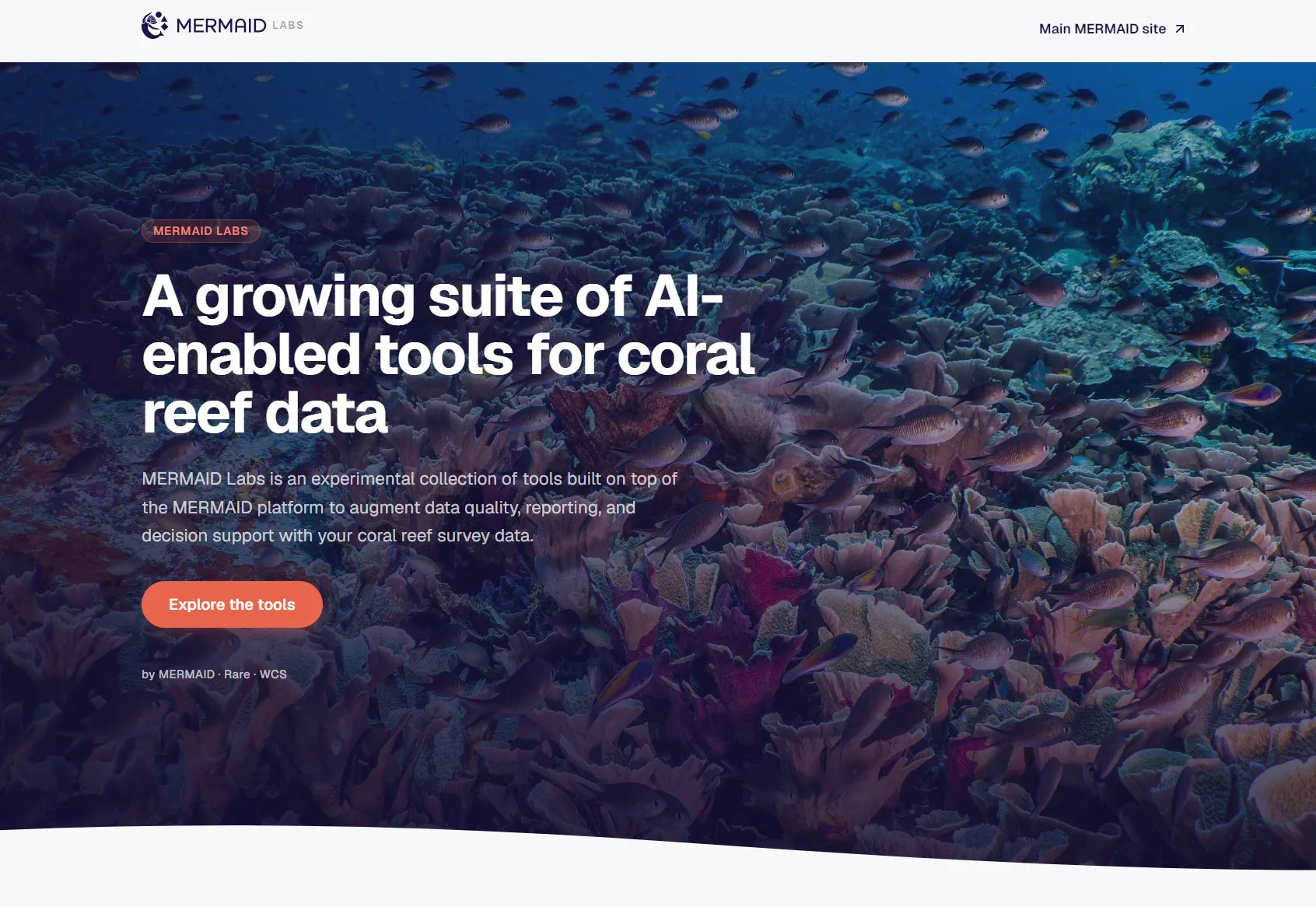
MERMAID is an open platform where reef scientists around the world record coral reef surveys. MERMAID Labs is a pair of tools I build on top of it, through a partnership between Rare and the Wildlife Conservation Society (WCS).
Cleaning Station checks survey data before anyone uses it. It flags values out of range, records that contradict each other, duplicate transects and observations that don’t make biological sense. Reviewers mark each finding as fixed, intentional or disputed, and a link takes them straight to the record that needs correcting.
Reef Insight Engine turns the same survey data into written reports. One set of evidence becomes a report for scientists, another for program managers, another for community leaders, each in the right language for its reader. Reports cover a single site, several sites or a whole project, and a chat assistant answers questions about the project’s own data.
Why it matters
Reef data drives decisions about where to protect and how. Bad records lead to bad decisions, and good data is wasted if the people who need it can’t read the analysis. These tools deal with both problems.
How I built it
Every judgment stays rule based and repeatable. In Cleaning Station, fixed rules decide what counts as a problem, and a language model only rewrites each finding in plain words. In Reef Insight Engine, the numbers, trends and comparisons are all calculated first, and the model writes from that evidence pack. The model never invents a figure.
I also retired rules that simply repeated checks MERMAID already runs on submission, so every finding is worth a reviewer’s time.
Technical detail
- One ETL pipeline and PostgreSQL warehouse serves both tools, and respects MERMAID’s public, summary and private access levels.
- Checks cover fish belt, benthic (point intercept, line intercept, photo quadrat), bleaching and habitat complexity protocols, with taxonomy and ecoregion context.
- Nightly sync, plus on demand import per project.
- Benchmarking against marine ecoregions and management regimes.
- Reports export to Markdown, HTML, PDF and Word, with shareable links.